From a coming-soon page to an immersive digital world.
Brand identity, narrative strategy, immersive web experience and launch foundation for a psychological indie game built around perception, memory, choice and identity.
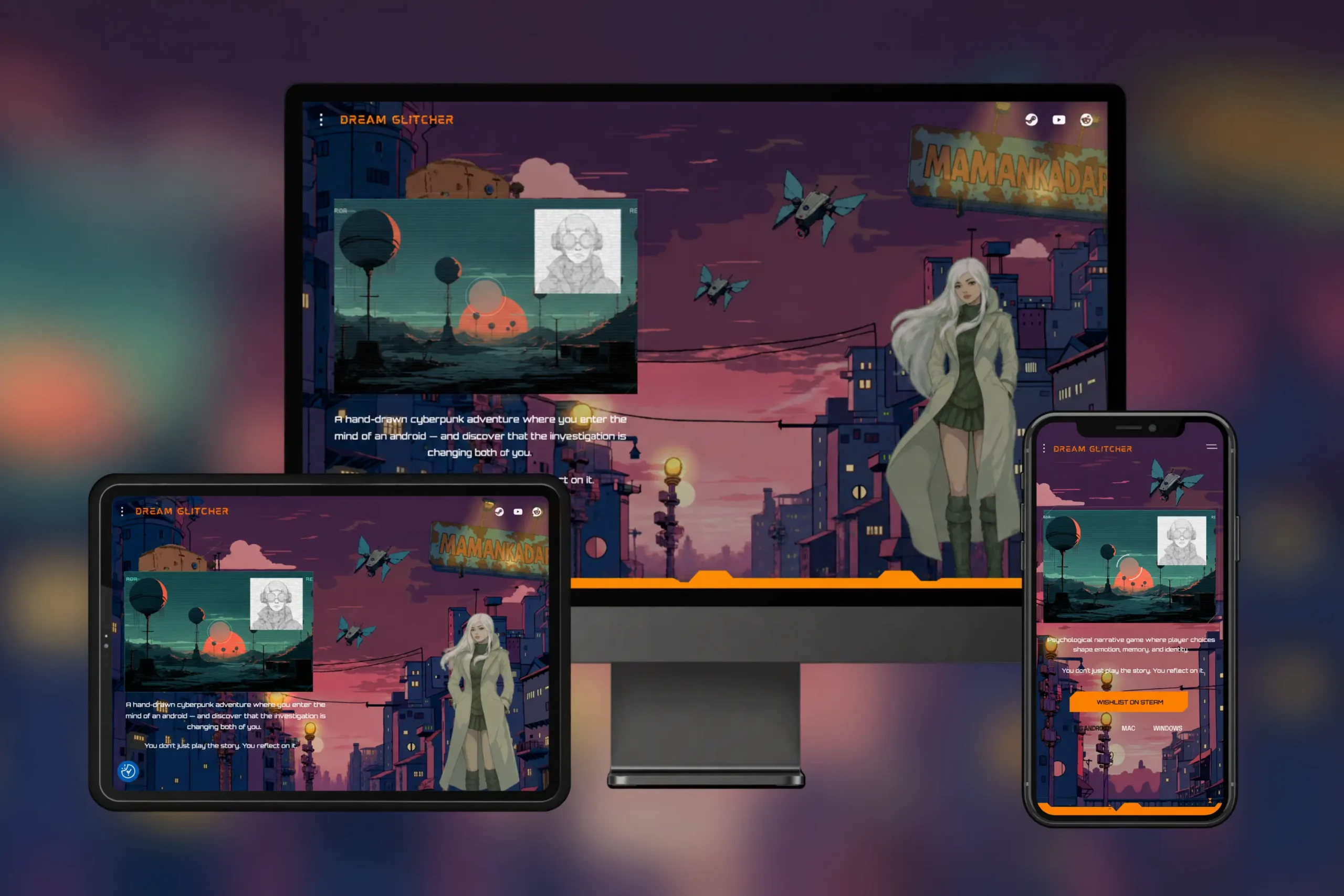
Dream Glitcher is a narrative-driven psychological game built around perception, memory, choice and identity.
The project started with a simple coming-soon website and a collection of game assets. The challenge was much bigger than redesigning a website: the game needed a digital identity, a way to communicate its world without explaining too much, and a foundation for how it could eventually be introduced to players.
AstaDigital developed the creative direction, brand identity, narrative approach and digital experience around the game – extending the work into launch strategy, content direction and presentation materials.
Dream Glitcher relies on mystery.
Its world is psychological, fragmented and deliberately uncertain. Explaining too much would weaken the experience. Explaining too little would leave potential players without a reason to care.
The existing website presented artwork and the basic idea of the game, but there was no cohesive identity or communication system connecting the story, visuals, studio and future marketing.
The goal became clear:
Create enough understanding to generate curiosity — without taking the mystery away.
To get there, the project had to go beyond conventional web design.
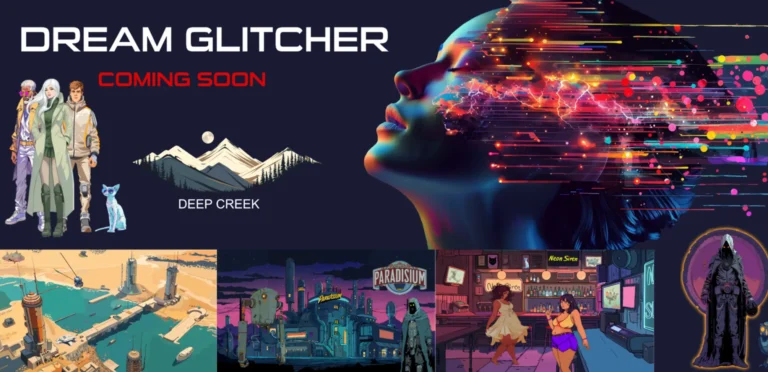
Understanding the developers’ own view of the game, its emotional core and themes.
Defining what should be revealed publicly – and what needed to remain uncertain.
A slower, atmospheric psychological experience where choice, perception and emotion carry the story.
Using discovery to guide the website, Steam direction, content and future marketing.
Before locking the direction, AstaDigital worked with the development team to understand how they saw Dream Glitcher themselves: which emotions mattered, which themes were central to the experience, and what should – and should not – be revealed publicly.
A dedicated discovery questionnaire helped establish those boundaries and provided a foundation for the website, Steam direction and future marketing.
This principle shaped the copy, visual hierarchy, interaction design, marketing concepts and even recommendations for video pacing and launch content.
The game already had a rich collection of illustrations and environments.
What it didn’t have was a cohesive identity around them.
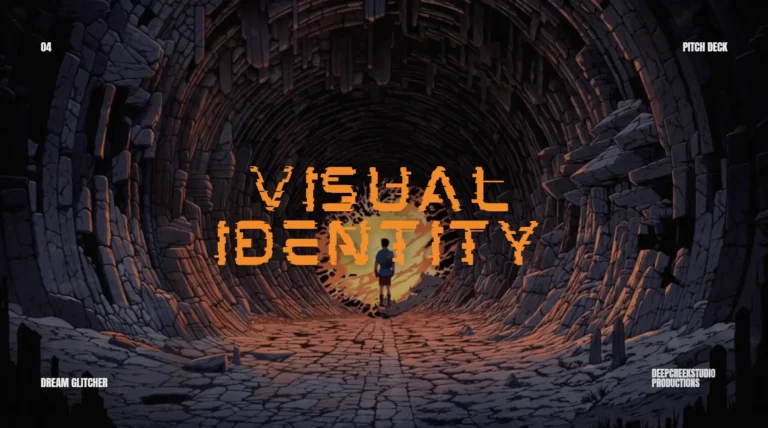
AstaDigital developed the Dream Glitcher logo, color direction, typography, interface language and overall art direction, creating a system capable of holding very different game environments together.
CINEMATIC PSYCHOLOGICAL SCI-FI · ANALOG GLITCH · DARK ENVIRONMENTS · NEON ACCENTS · SIGNAL INTERFERENCE · MINIMAL INTERFACES · ATMOSPHERIC IMAGERY
The visual system was deliberately restrained around the game’s artwork.
Instead of competing with the game world, the interface became part of it.
The same direction was carried across the website and presentation materials.

Instead of building a conventional game website around feature blocks and marketing copy, the experience was designed as an extension of Dream Glitcher itself.
Visitors aren’t simply told what the game is.
Fragments.
Signals.
Observations.
Questions.
The website gradually introduces a world that appears to be watching the player as much as the player is watching it.
Dream Glitcher
YEAR
2026
Immersive Game Website
BUILT WITH
WordPress
Brand · Digital Experience · Marketing & Launch
The narrative language was developed around a simple rule: reveal enough to make the player ask another question.
Copy was written and structured as fragments rather than conventional promotional text. Headlines, system messages, captions and CTAs work together to suggest that something beneath the visible world is observing, measuring and adapting.
The experience repeatedly shifts perspective between the player and the system.
That approach allowed the website to communicate the game’s psychological themes without revealing the story itself.
The game’s existing artwork was selected and positioned according to narrative function rather than simply filling layouts.
Wide environments establish scale and isolation.
Character imagery introduces Luna without over-explaining her.
Interior scenes create intimacy.
Contrasting environments reinforce the tension between stable and distorted realities.
Additional visual requirements were identified during the process – including atmospheric world scenes, alternative emotional contexts for Luna and imagery capable of communicating contrasts such as calm vs. glitch and real vs. distorted.
The website was designed and developed in WordPress with custom styling and interaction work.
The project included the structure and user flow across six pages, responsive layouts, custom CSS, glitch and signal-inspired details, hover interactions, image optimization and final UX refinement.
The technical foundation also included on-page SEO, Google Search Console integration, Consent Mode and cookie consent configuration, preparing the website for indexing, measurement and privacy-aware tracking.
Conventional website patterns were intentionally reduced wherever they interrupted immersion.
Instead, typography, spacing, dark negative space, imagery and small interface signals guide the visitor through the experience.
Conventional website patterns were intentionally reduced wherever they interrupted immersion.
Instead, typography, spacing, dark negative space, imagery and small interface signals guide the visitor through the experience.
A doorway into the game’s universe.
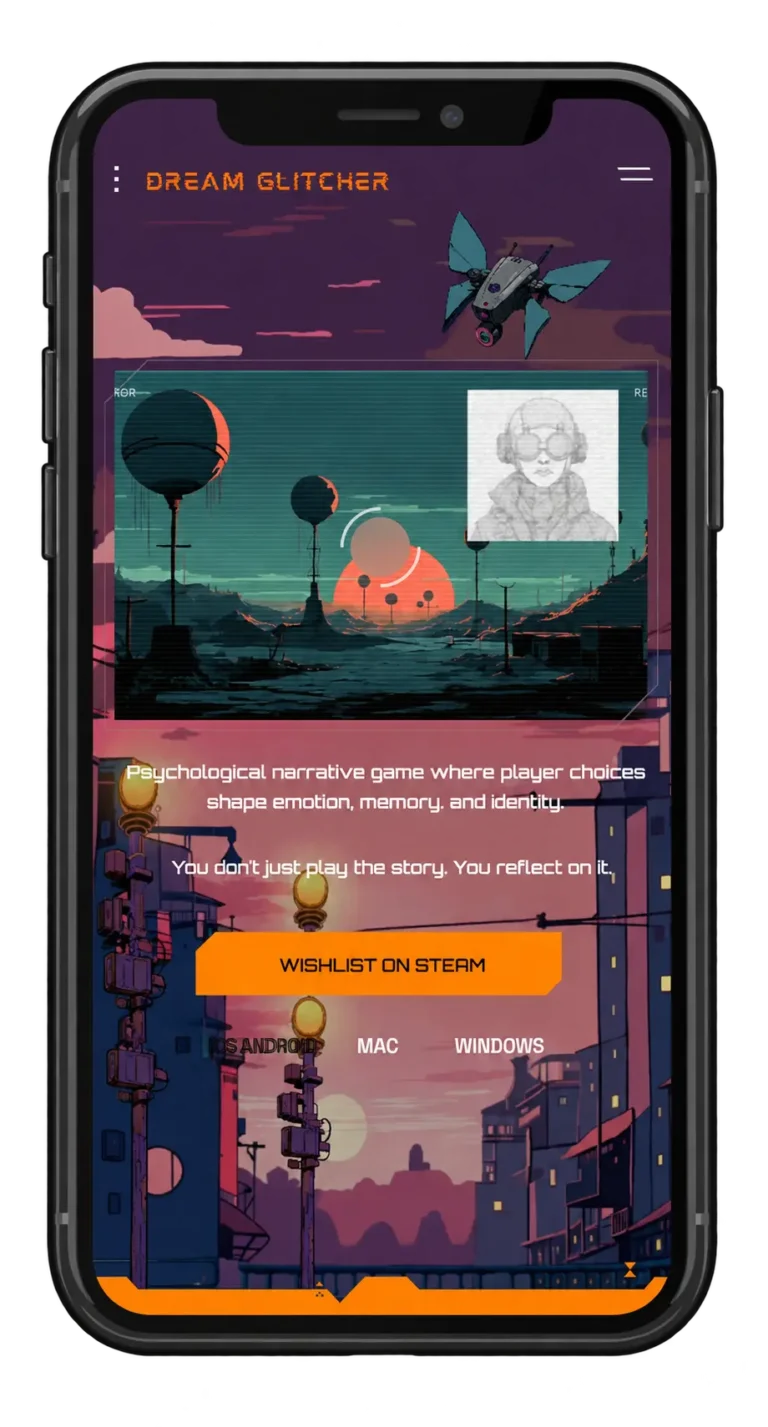


DREAM GLITCHER
The immersive layer
Narrative
Atmosphere
Mystery
Player experience
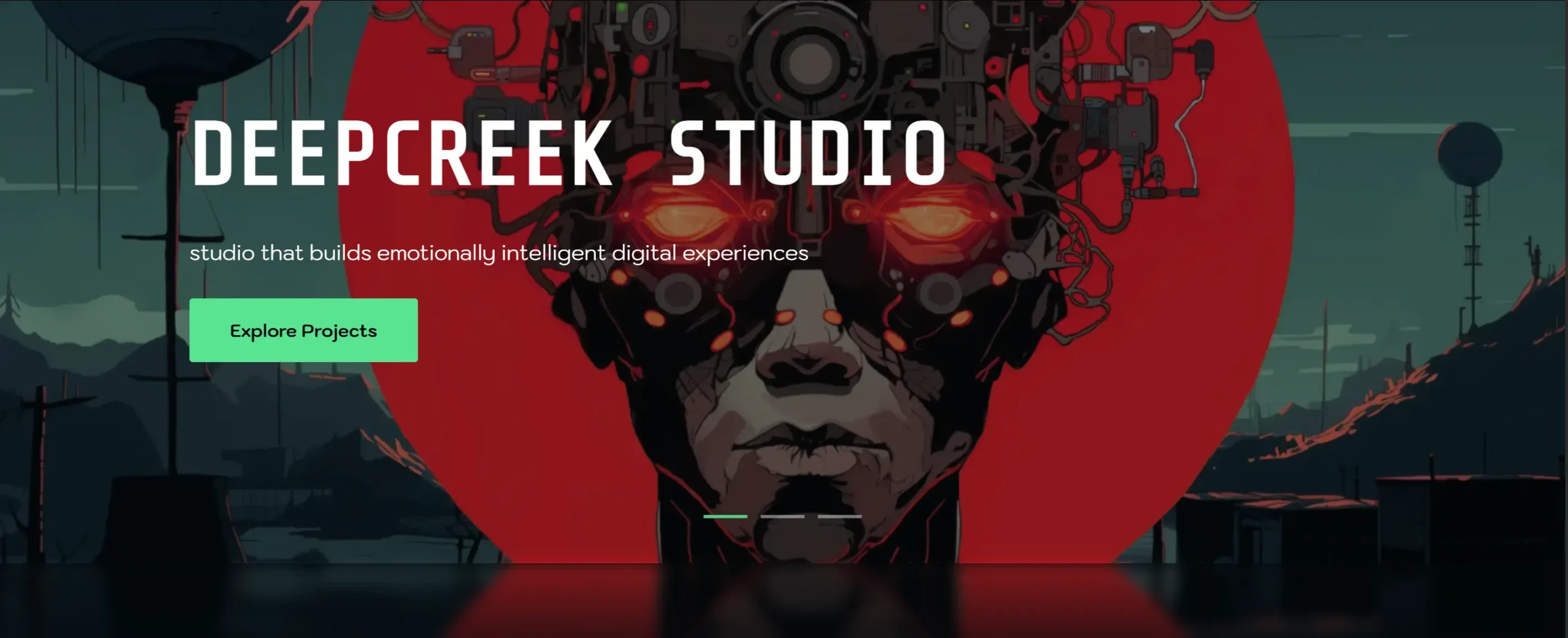
DEEP CREEK STUDIO
The real layer
Developer identity
Studio information
Partnerships
Funding
Practical communication
The communication architecture needed to distinguish the fictional experience from the real organization creating it.
That distinction allowed the project to preserve immersion while still providing a credible foundation for business, media and partnership communication.
THE WEBSITE WAS ONLY ONE PART OF THE SYSTEM.
The digital strategy did not stop at the website.
As Dream Glitcher moved closer to public presentation, the work expanded into Steam optimization, video production, press materials and channel preparation — translating the identity and narrative direction already established online into practical launch infrastructure.
The goal remained the same: make the game easier to discover, understand and present without explaining away the mystery at the centre of the experience.
FROM DIGITAL EXPERIENCE TO LAUNCH INFRASTRUCTURE.
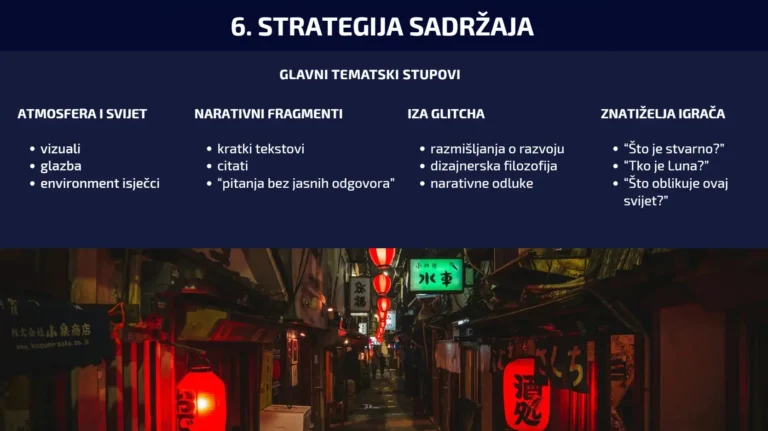
visuals · music · environment fragments
short texts · quotes · questions without clear answers
development thinking · design philosophy · narrative decisions
What is real? · Who is Luna? · What shapes this world?
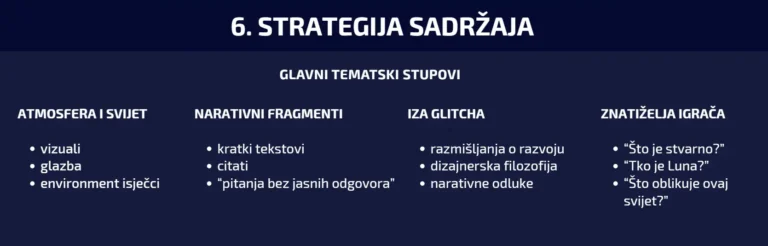
Fragmented storytelling, mystery-driven content, atmospheric short-form video, community-first communication and gradual reveals were designed to build recognition without destroying the uncertainty at the heart of the game.

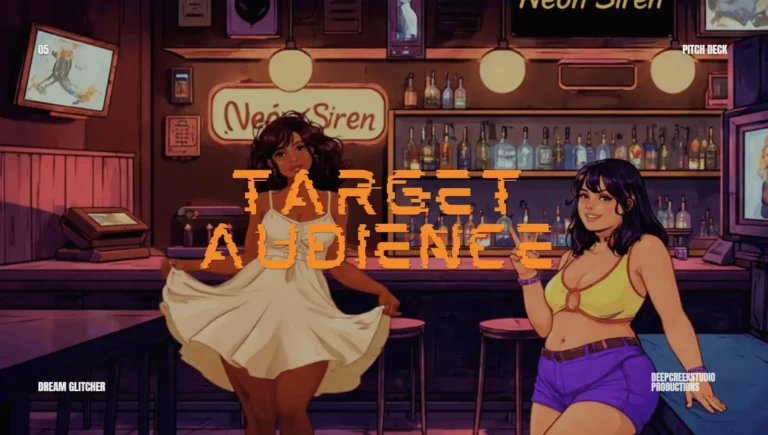
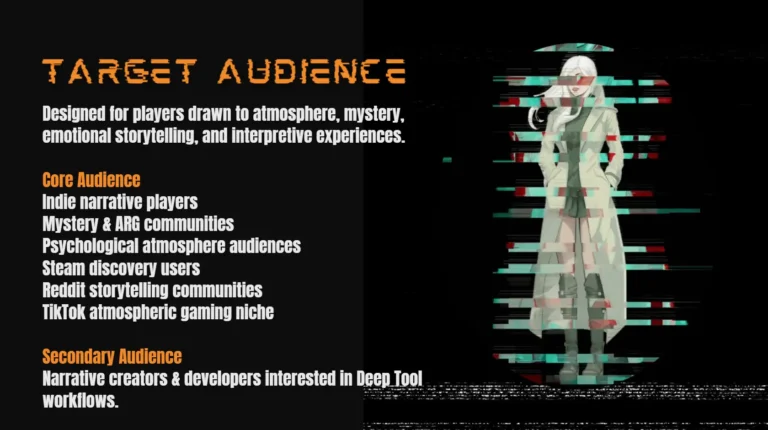
The target audience was defined around players already drawn to narrative and atmospheric experiences: indie narrative gamers, mystery and ARG communities, psychological-game audiences, Steam discovery users and niche storytelling communities.
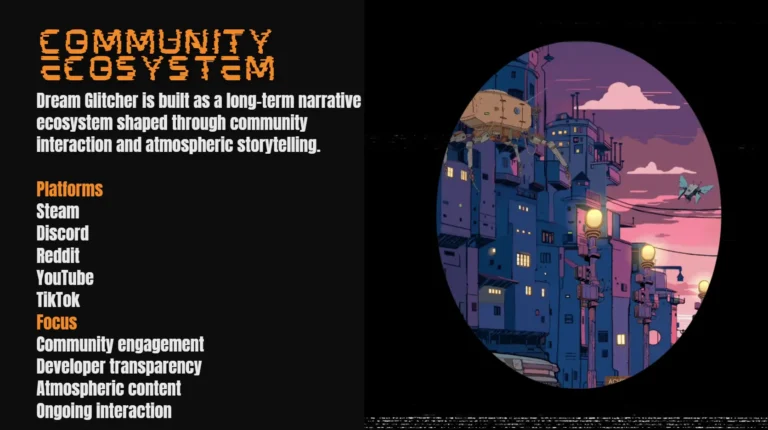
Rather than treating every platform the same, channel recommendations were shaped around the role each one could play across discovery, storytelling, developer communication, community-building and conversion.
Steam was positioned as the primary platform – the central space for wishlist growth, page clarity, launch readiness and participation in relevant events and festivals.
AstaDigital also supported the broader Deep Creek Studio presence on YouTube and Reddit, while providing consulting around how Dream Glitcher should be presented on Steam and supporting channels.
The work also extended into recommendations around when and how the game should begin appearing publicly.
The proposed roadmap moved from demo preparation and Steam-page optimization into atmospheric teaser content, community activity and festival visibility – followed by a public demo, creator and media outreach, wishlist conversion and launch preparation.
Teaser content · community activity · early visibility
Public demo release · creator & media outreach · festival visibility
Wishlist conversion · community growth · release preparation
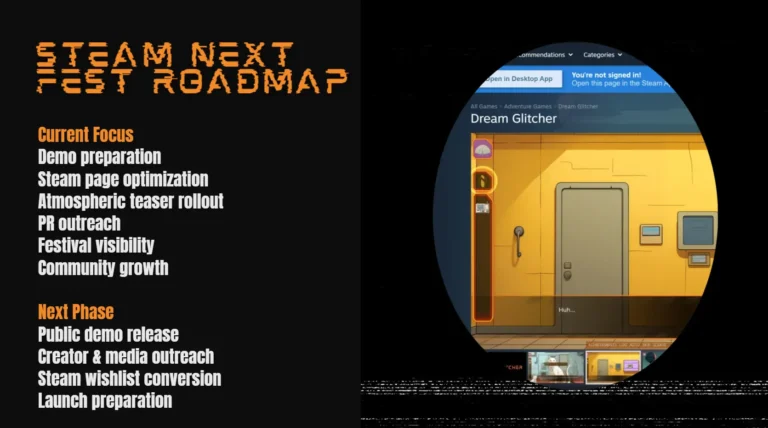
LAUNCH SEQUENCE DEFINED IN THE DREAM GLITCHER PITCH DECK
The launch strategy was translated into a practical operational marketing plan covering the period from April through December 2026.
The roadmap defined monthly priorities across positioning, channel setup, Steam optimization, content, community building, PR, demo promotion, festival visibility and launch preparation — creating a structured path from early marketing foundations to market readiness.
The plan was delivered as a strategic and operational framework for the studio. Ongoing execution remained dependent on available resources and the studio’s internal priorities.
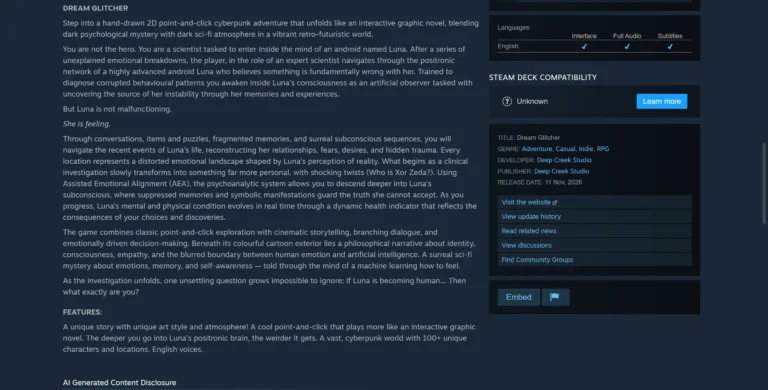
A detailed audit of the existing Dream Glitcher Steam Store presence was carried out against the game’s positioning, available assets and official Steamworks guidance.
The work covered the store copy, visual hierarchy, screenshot and trailer sequencing, tags, technical information and supporting assets — with the goal of making the page clearer, more persuasive and more consistent with the identity already established across the website and wider campaign.
New English copy was prepared for the Short Description and About This Game sections, together with implementation guidance for the development team.
Supporting materials included gameplay GIFs, an AEA / Human–Android visual explanation, trailer thumbnails, additional capsule-art concepts and a recommended ordering of screenshots and video content.
OPTIMIZE THE STORE WITHOUT EXPLAINING THE GAME AWAY.
The video direction developed for Dream Glitcher followed the same principle as the wider digital experience: atmosphere before explanation.
That direction expanded into hands-on production. A gameplay video for Steam was assembled, reviewed and revised, combining the original gameplay sequence with additional locations, the original animated ending and complete audio.
Creative consultation also covered the broader promotional-video direction – including pacing, atmosphere and how future video content should connect back to the game’s narrative identity.
To play this video on this website, you need to accept cookies. Alternatively, you can watch it directly on YouTube
Preparing Dream Glitcher for external communication required more than a single press document.
A complete set of media materials was developed to give journalists, creators and potential partners both the context and the practical assets needed to present the game accurately.
Press communication was prepared for different stages of the launch cycle, including the game release and its Steam Next Fest presence, supported by bilingual press materials, ready-to-use visual assets and packaged outreach resources.
Everything was aligned with the identity and positioning already established across the website, Steam strategy and wider launch direction.
Game overview · positioning · key information · visual identity · studio context
A complete presentation system was created so Dream Glitcher could be communicated beyond the website – across partner conversations, marketing planning, audience positioning and future launch activity.
The pitch deck structured the game itself, while the pre-launch marketing strategy translated that identity into a practical communication and channel framework.
Game Concept → World & Atmosphere → Gameplay → Visual Identity → Target Audience → Marketing Approach → Development Tools → Community & Distribution → Roadmap → Future Development
FROM A PLACEHOLDER PAGE
TO A CONNECTED BRAND, DIGITAL EXPERIENCE AND LAUNCH FOUNDATION.
Dream Glitcher evolved from a coming-soon page and a collection of game assets into a connected digital system with its own identity, narrative language and launch foundation.
The work brought brand, storytelling, UX/UI, web development, content, marketing strategy, Steam direction, video, press materials and presentation tools into one coherent framework.
Rather than treating each deliverable as a separate piece, the project established a consistent way for Dream Glitcher to look, speak and introduce itself across every player, media and partner touchpoint.